Top 5 Most Fascinating Penguin Species in the World
From the towering Emperor to the tiny Little Blue, explore the five most remarkable penguin species and discover what makes each one extraordinary in its own right.
Top 5 Most Fascinating Penguin Species in the World
Of the 18 penguin species spread across the Southern Hemisphere, each brings something special to the table. Some impress with size, others with agility. Some thrive in the frozen Antarctic while others prefer warmer beaches. But if you had to pick just five species, which ones would make the cut?
Here's our lineup of the most fascinating penguin species on Earth, each chosen for their distincive abilities to adapt, unique behaviors, and the extraordinary ways they've carved out niches in some of the planet's most challenging environments.
1. Emperor Penguin: The Undisputed Champion
Scientific name: Aptenodytes forsteri
Location: Antarctica
Population: ~595,000
Conservation status: Near Threatened
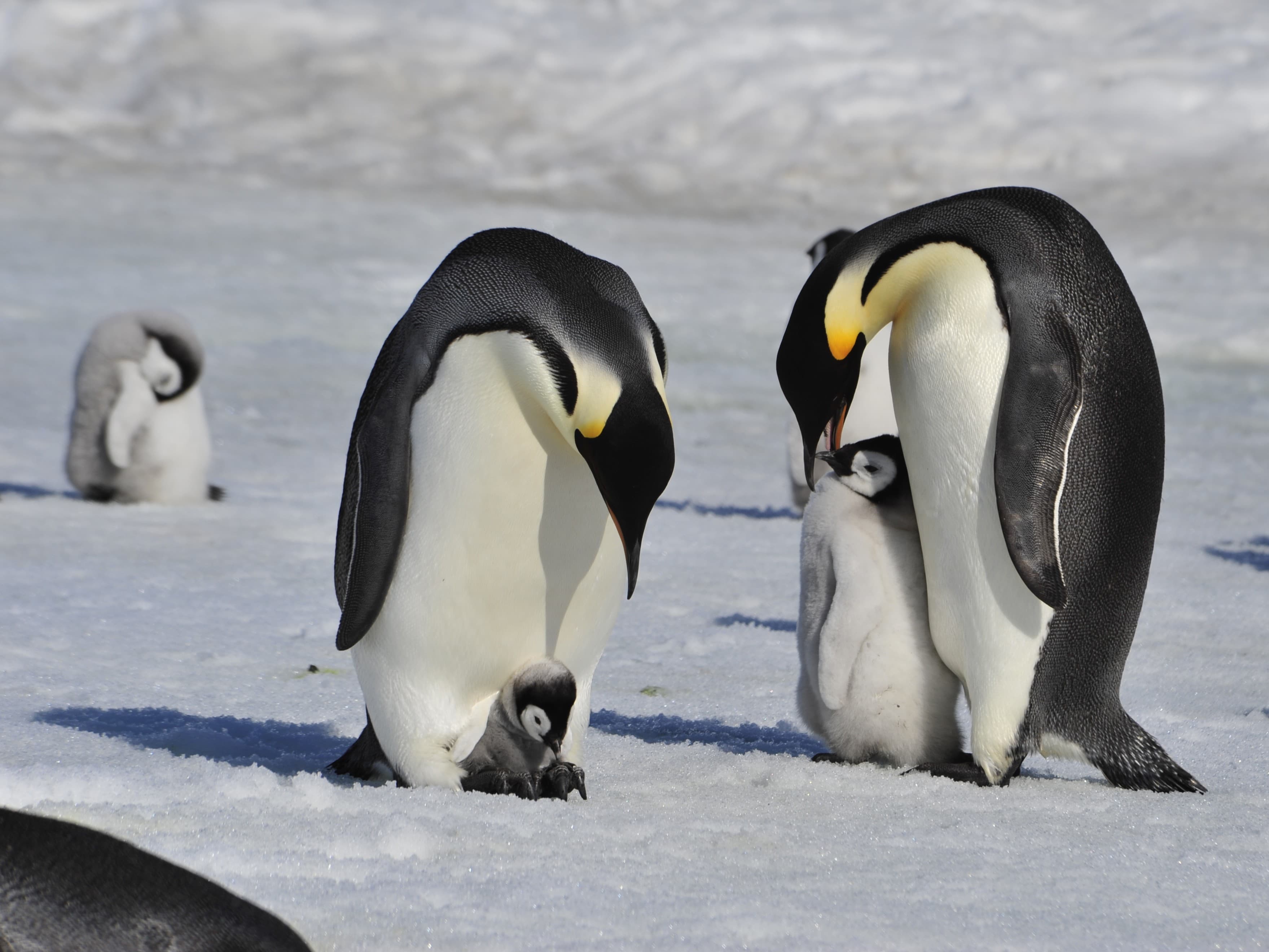
When it comes to penguin superiority, Emperor Penguins collect all the trophies. Tallest penguin? Check - standing up to 122 cm. Heaviest? Absolutely, weighing up to 45 kg. Deepest diver? Without question, reaching biggest record ever documented - 564 meters. Best breeder in the harshest conditions? No contest - they're the only bird that breeds during the Antarctic winter.
Emperor Penguins represent penguinhood taken to its absolute limit. While every other Antarctic species flees the continent's brutal winter, Emperors march inland across the sea ice to breed in complete darkness and temperatures that can hit -60°C with freezing wind.
The male's four-month fast while incubating a single egg on his feet ranks among the most extreme endurance for starvation in the animal kingdom. The coordinated huddles of thousands of males rotating positions to share warmth demonstrate social cooperation on a scale rarely seen in nature.
Their diving skills beat marine mammals and that's not even a competition. Emperor penguin can have 20+ minute dives to depths where sunlight never penetrates require extraordinary physiological characteristics. Scientists are still studying their collapsed lungs ability to prevent decompression sickness, extreme oxygen storage capacity, and the ability to slow their heart rate to just 15-20 beats per minute.
What makes them special: No other bird species even attempts what Emperor Penguins do routinely. They've defined an entirely unique ecological niche by breeding when and where nothing else can and there's nothing else to do.
2. Galápagos Penguin: The Tropical Survivor
Scientific name: Spheniscus mendiculus
Location: Galápagos Islands, Ecuador
Population: ~1,200 (smallest of any penguin species)
Conservation status: Endangered
Finding a penguin on the equator seems like a glitch in the matrix, but Galápagos Penguins prove that penguins aren't just cold-weather animals - they're opportunists who go wherever cold, nutrient-rich water provides food.
These are the only penguins living north of the equator, thriving in a place where you'd more expect to find sea lions and marine iguanas. They survive because the Cromwell Current brings cold, food-rich water from the deep ocean to the Galápagos coast.
At only 49-50 cm tall and weighing around 2.5 kg, Galápagos Penguins are among the smallest penguin species. Their compact size is actually biological adjustments - smaller bodies lose heat more efficiently, crucial when ambient temperatures can reach 38°C.
They've developed fascinating coping mechanisms for heat management. Unlike Antarctic penguins who huddle for warmth, Galápagos Penguins spread their flippers to radiate heat. They pant like dogs to cool down and often stand with their back to the sun to shade their feet. Many hunt at night when water temperatures are lower.
Their breeding strategy is uniquely flexible. While most penguins have rigid seasonal breeding cycles, Galápagos Penguins can breed multiple times per year if conditions are right. This adaptability helps offset their small population size and vulnerability to El Niño events.These events are periods when unusually warm ocean water develops in the central and eastern Pacific, disrupting global weather patterns and often causing extreme conditions like heavy rains, droughts, and heatwaves around the world.
What makes them special: They've proven that penguins can adapt to almost any environment as long as cold ocean provide necessary food. Their survival on the equator challenges everything we think we know about where penguins can live.
3. Rockhopper Penguin: Brave Punk
Scientific name: Eudyptes chrysocome
Location: Sub-Antarctic islands, southern South America
Population: ~2.5 million (all species combined)
Conservation status: Vulnerable to Endangered
If penguins had a rebellious teenager, it would be the Rockhopper. These small birds, standing about 55 cm tall and weighing around 3 kg, have the most punk-rock look in the penguin world, with spiky yellow-and-black head feathers that stick up as if styled with gel and bright red eyes that give them a permanently fierce expression.
But their attitude matches their appearance. Rockhoppers are named for their preferred method of getting around rocky terrain: literally hopping with both feet together rather than waddling like other penguins do. They bounce up cliff faces, leap between rocks, and navigate terrain that would challenge a mountain goat.
These penguins have serious vertical skills. Their breeding colonies are often located on steep, rocky cliffsides that require them to scale obstacles several times their own height. They approach these climbs with apparent enthusiasm, hopping and scrambling with determination.
In the water, they're equally impressive. Rockhoppers regularly dive to 100 meters and can reach depths of 170 meters hunting for krill, squid, and small fish. They're aggressive hunters, moving in quick bursts that contrast sharply with the slower, more methodical style of larger penguins.
Their personality is notably different from other species. Rockhoppers are scrappy, vocal, and quick to challenge threats. They're known for their aggressive displays, raising their head feathers, emitting loud, harsh calls, and jabbing their sharp beaks at intruders.
What makes them special: No other penguin combines such distinctive appearance with such bold personality. They show that in nature small size doesn't mean timid behavior.
4. King Penguin: The Elegant Socialite
Scientific name: Aptenodytes patagonicus
Location: Sub-Antarctic islands
Population: ~2.2 million breeding pairs
Conservation status: Least Concern
King Penguins are what you'd get if Emperor Penguins had a slightly smaller, more social cousin who preferred milder climates and massive colonies. At 85-95 cm tall, they're the second-largest penguin species and arguably the most elegantly dressed.
Their plumage coat is distinctive: brilliant orange and yellow patches on the sides of their heads and upper chest that seem to glow against their silver-white breast and blue-black back. The colors are more vibrant than Emperors, giving Kings an almost royal appearance.
What truly sets King Penguins apart is their social behavior. While Emperors breed in colonies of thousands, King Penguin colonies can number in the hundreds of thousands. South Georgia Island hosts colonies with over 200,000 breeding pairs - so dense that from above, the colonies look like colourful carpets.
Their breeding cycle is fascinatingly complex. Unlike most penguins with annual breeding cycles, Kings take 14-16 months from egg-laying to chick independence. This means they can only successfully raise two chicks every three years, creating an unusual, overlapping breeding pattern.
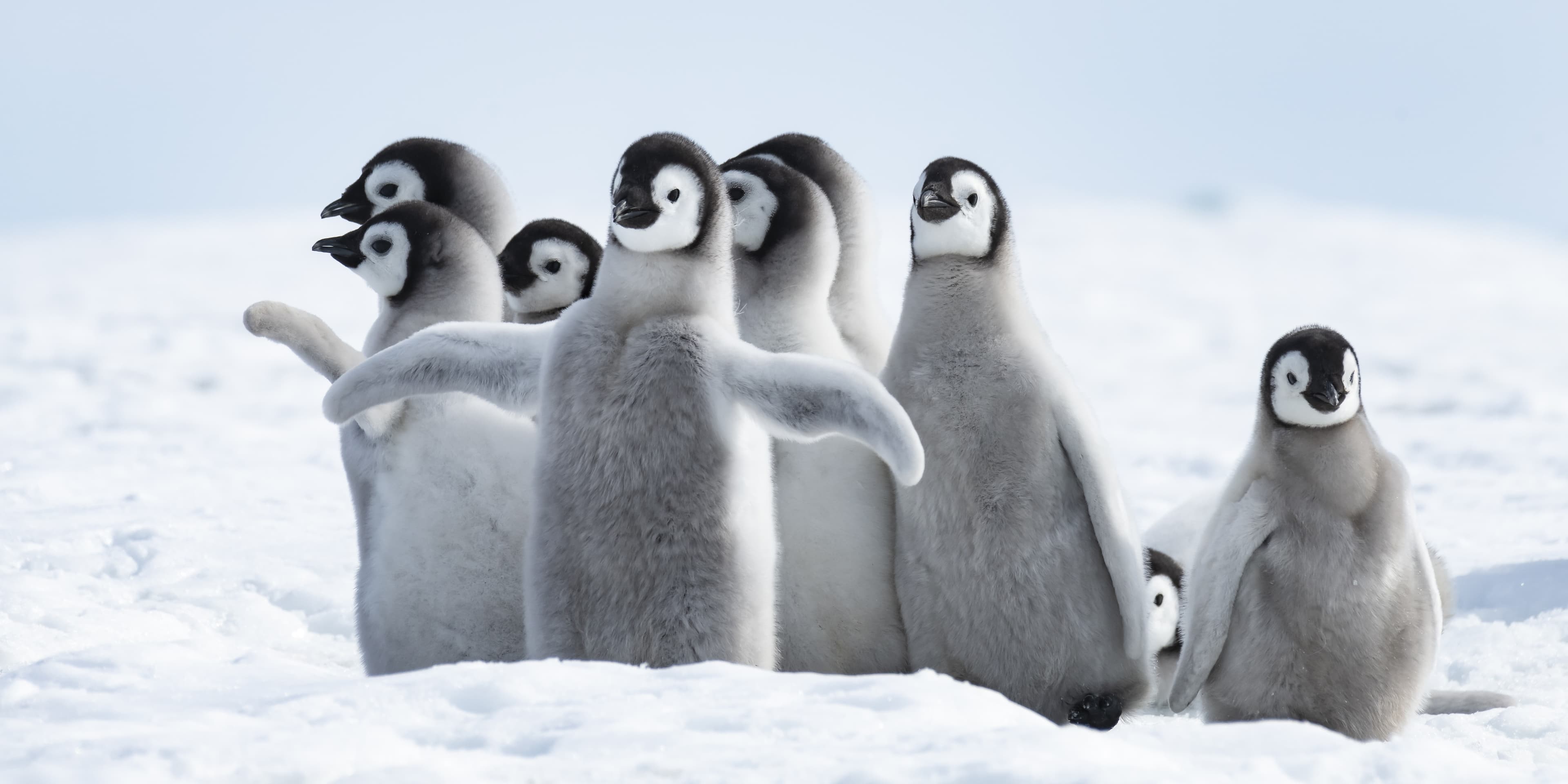
King Penguin chicks go through a "brown phase" where they develop thick, fluffy brown down that makes them look like giant teddy bears - often larger than their parents. To stay safe and conserve energy, King penguin chicks form creches, tightly packed nursery groups that can contain even thousands of youngsters.
Their diving abilities are impressive too. Kings regularly dive to 200-300 meters and can stay underwater for over 8 minutes while hunting for lanternfish and squid.
What makes them special: King penguins show how remarkably effective the penguin body plan becomes when adapted to sub-Antarctic environments. Their massive colonies also reveal surprisingly sophisticated social structures.
5. Little Blue Penguin: The Tiny Giant-Killer
Scientific name: Eudyptula minor
Location: Coastal Australia and New Zealand
Population: ~470,000
Conservation status: Least Concern
Meet the penguin world's David among Goliaths. Little Blue Penguins stand just 30-33 cm tall and weigh only 1-1.5 kg - roughly the size of a bowling pin. They're the smallest penguin species on Earth, yet they've conquered some of the most urbanized coastlines in the Southern Hemisphere.
Their blue-grey plumage is unique among penguins. Instead of the typical black and white, they have from slate-blue to indigo backs that shimmer in the light. This coloration likely helps with camouflage during their dawn and dusk activity periods.
What's remarkable about Little Blues is how they've adapted to living alongside humans. They nest in burrows, rocky crevices, and increasingly, under coastal homes, in stormwater drains, and beneath boardwalks. Some colonies exist in major urban areas like Sydney and Melbourne.
They're nocturnal commuters, heading out to sea before sunrise and returning after sunset in groups called "rafts." This behavior protects them from aerial predators. Watching these penguins make their way up the beach at dusk has become a major tourist attraction on Phillip Island, Australia.
Despite their small size, they're efficient hunters. Little Blues dive to depths of 20-30 meters and can stay underwater for over 2 minutes while hunting small fish, squid, and krill. They're adapted for inshore feeding, taking advantage of coastal upwellings.
What makes them special: Little Blue Penguins prove that ability to adapt isn't about size. They've adapted to urban environments and maintained stable populations despite heavy human presence - something larger species often struggle with.
What Makes a Penguin Species Unique?
Our top five represent different success strategies across the penguin family tree. The Emperor pushes biological limits. The Galápagos adapts to unexpected environments. The Rockhopper brings attitude and agility. The King demonstrates the power of social cooperation. The Little Blue proves that small and adaptable beats large and specialized in human-modified environments.
Together, they show that there's no single "right way" to be a penguin and humans travel to visit their favorite ones.