Where Do Penguins Live Beyond Antarctica?
Penguins aren't just Antarctic birds. Discover the surprising locations where penguins thrive, from tropical beaches to South American coasts and remote islands.
Ask someone where penguins live, and they'll probably say Antarctica. And they're not wrong - several penguin species do call the frozen continent home. But here's what might surprise you: most penguin species have never set foot on Antarctica.
Of the 18 penguin species in the world, only 4 breed on the Antarctic continent itself. The rest? They're scattered across the Southern Hemisphere in places that would shock anyone who thinks penguins need ice and snow. Some waddle on tropical beaches. Others nest in burrows beneath city streets. A few even live north of the equator.
Do penguins only live in Antarctica? Absolutely not. Penguins live throughout the Southern Hemisphere—in Antarctica, sub-Antarctic islands, New Zealand, Australia, South America, South Africa, and even the Galápagos Islands near the equator. Most species prefer coastlines influenced by cold ocean currents rather than icy environments. A world map of penguin habitats would show a clear pattern—every species lives south of the equator.
The key to penguin geography: Penguins don't live where it's cold—they live where cold currents bring food.
Where Do Penguins Live in the World?
| Region | Penguin Species | Climate | |--------|----------------|---------| | Antarctica | Emperor, Adélie, Chinstrap, Gentoo | Extreme cold | | Sub-Antarctic Islands | King, Macaroni, Rockhopper, Royal | Cold | | New Zealand | Yellow-eyed, Little Blue, Fiordland, Snares | Temperate | | Australia | Little Blue | Temperate | | South America | Magellanic, Humboldt | Temperate to cool | | South Africa | African | Warm temperate | | Galápagos Islands | Galápagos | Tropical |
Antarctica: The Classic (But Minority) Habitat
Yes, Antarctica has penguins. Four species breed on the continent or Antarctic Peninsula:
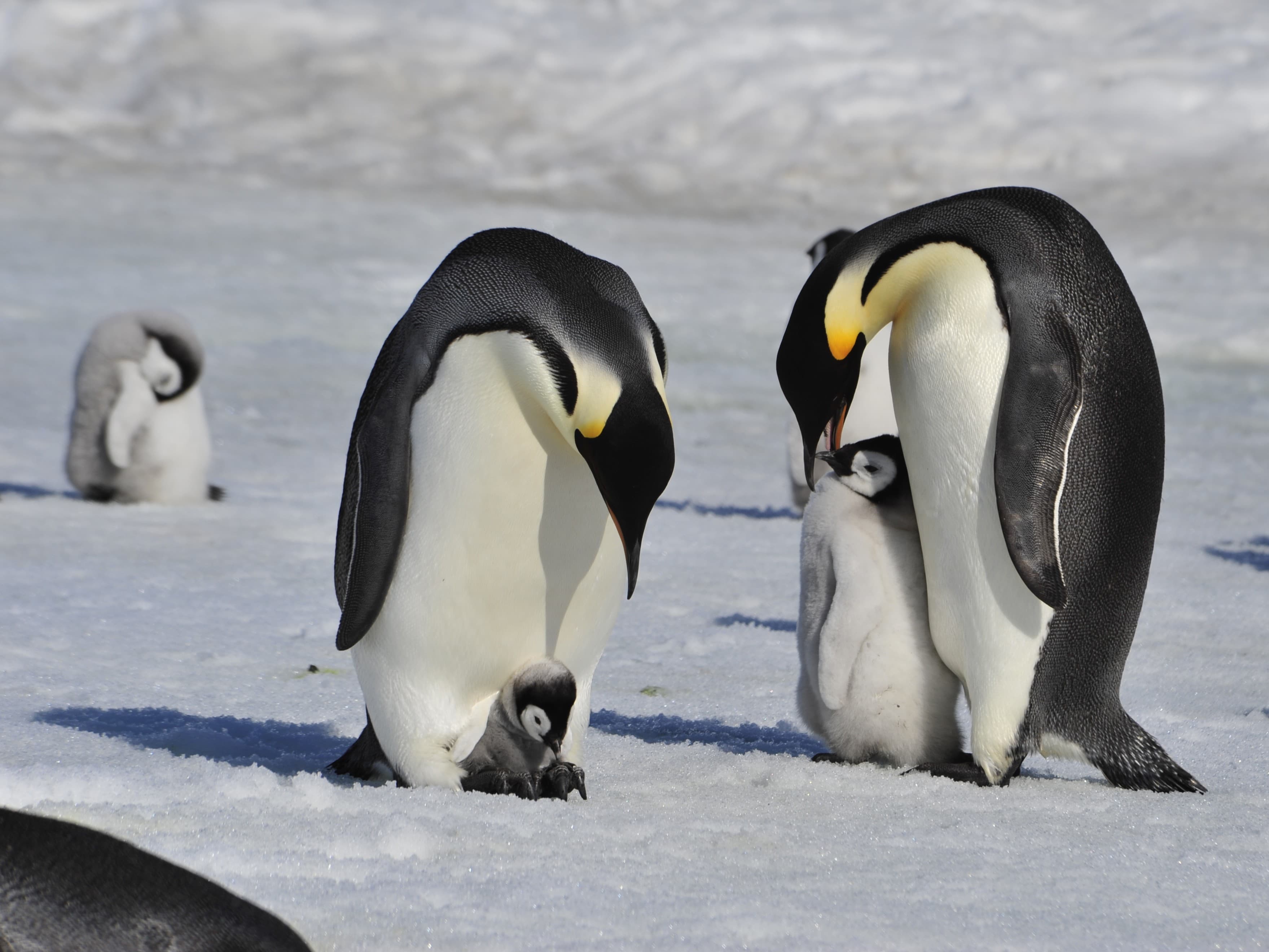
Emperor Penguins breed on sea ice around the continent during the Antarctic winter—the most southerly breeding birds on Earth and the most cold-adapted penguins.
Adélie Penguins nest on rocky Antarctic shores. Along with Emperors, they're one of only two species that live exclusively on the Antarctic continent.
Chinstrap Penguins breed primarily on the Antarctic Peninsula and nearby islands, commonly associated with ice and snow.
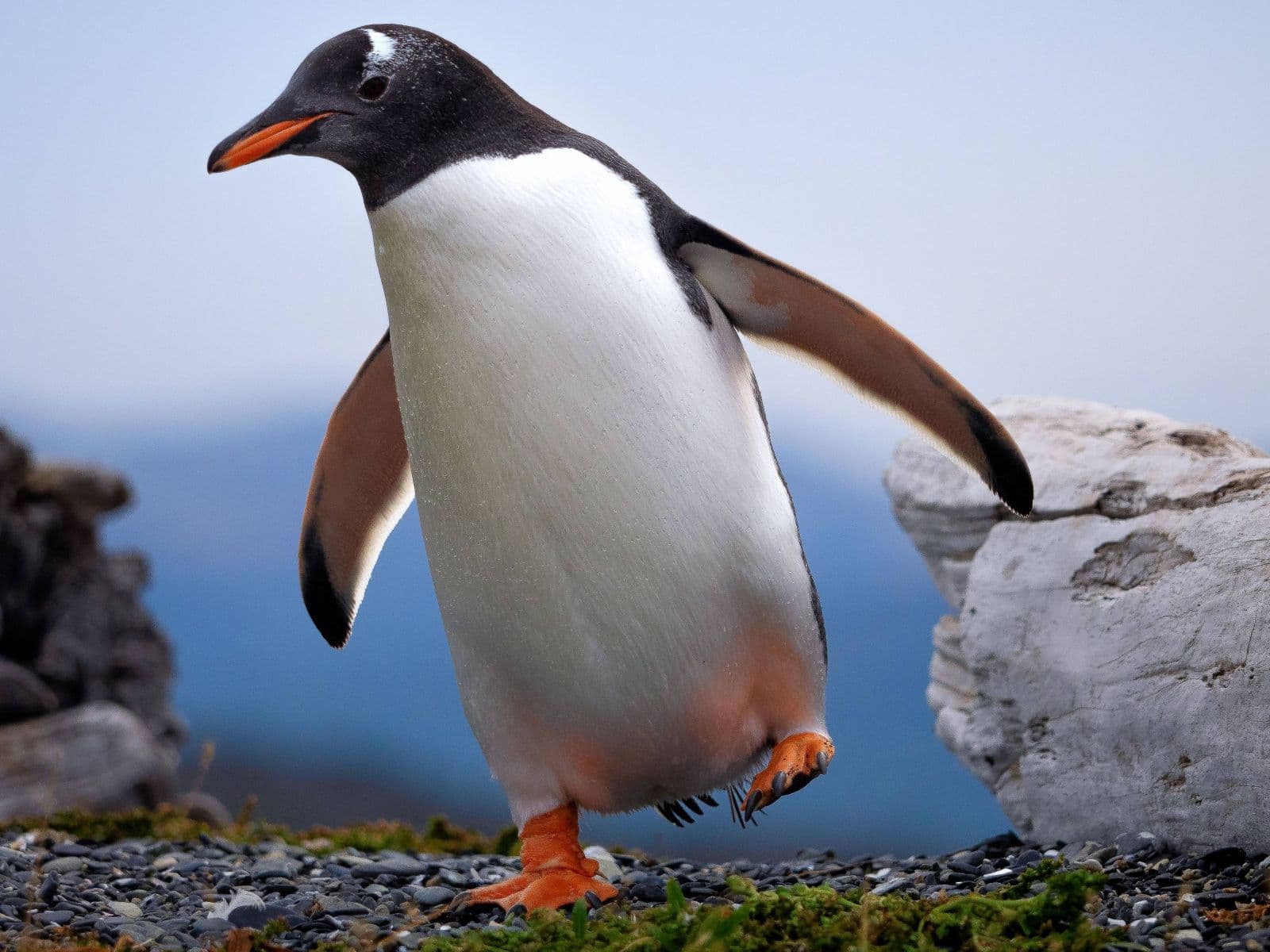
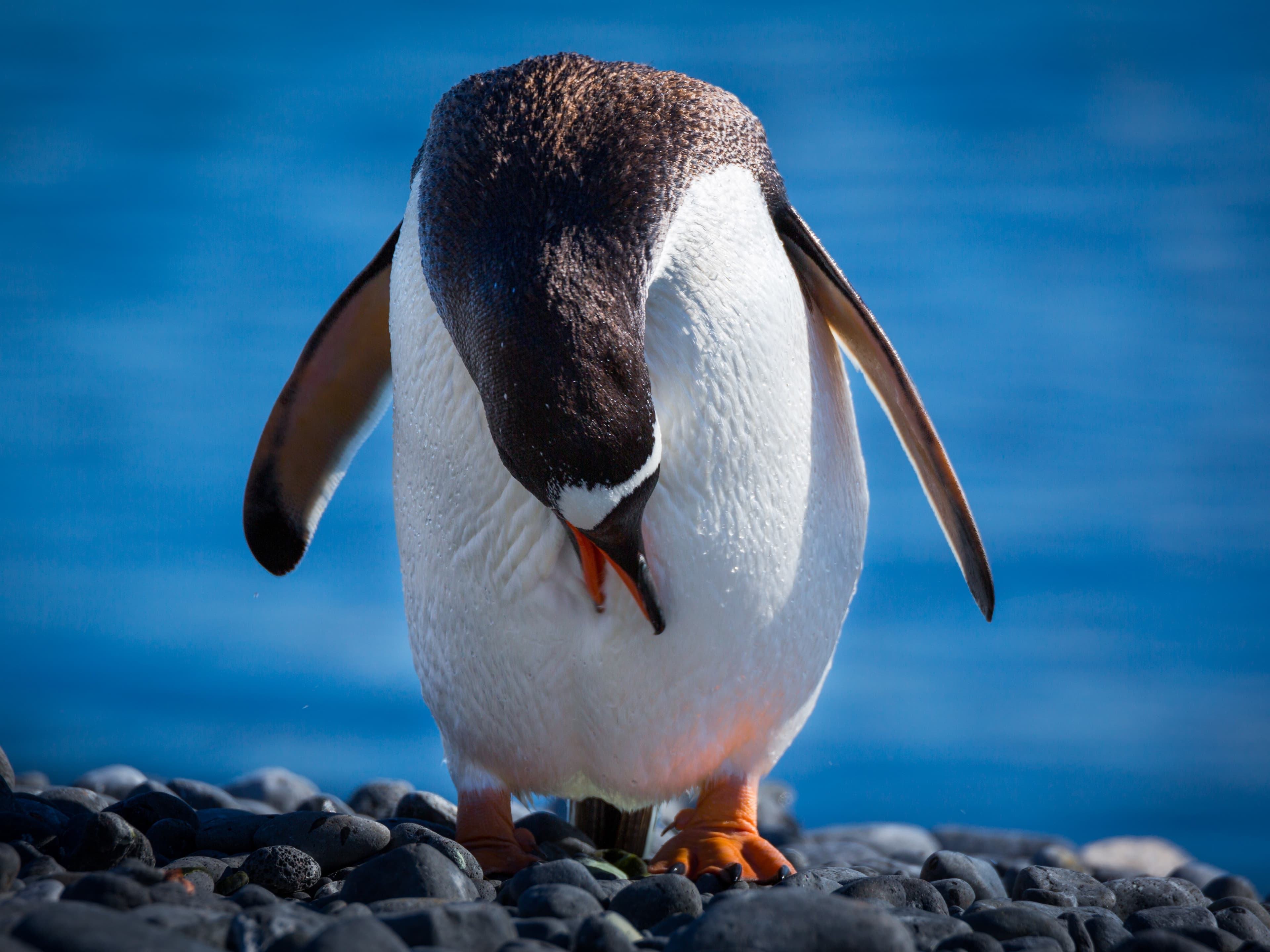
Gentoo Penguins have the widest range, breeding on the Antarctic Peninsula and extending north to sub-Antarctic islands.
These four species represent less than 25% of all penguins. The majority live elsewhere.
Sub-Antarctic Islands: The Real Penguin Hotspot
The windswept, rocky islands between Antarctica and the southern continents host some of the largest penguin colonies on Earth.
King Penguins breed in enormous colonies on islands like South Georgia and the Falklands. Some colonies contain over 200,000 breeding pairs, creating living carpets of orange and silver birds.
Macaroni Penguins are the most numerous penguin species, with populations around 12 million. They breed in massive colonies across sub-Antarctic islands, recognizable by their yellow crest feathers.
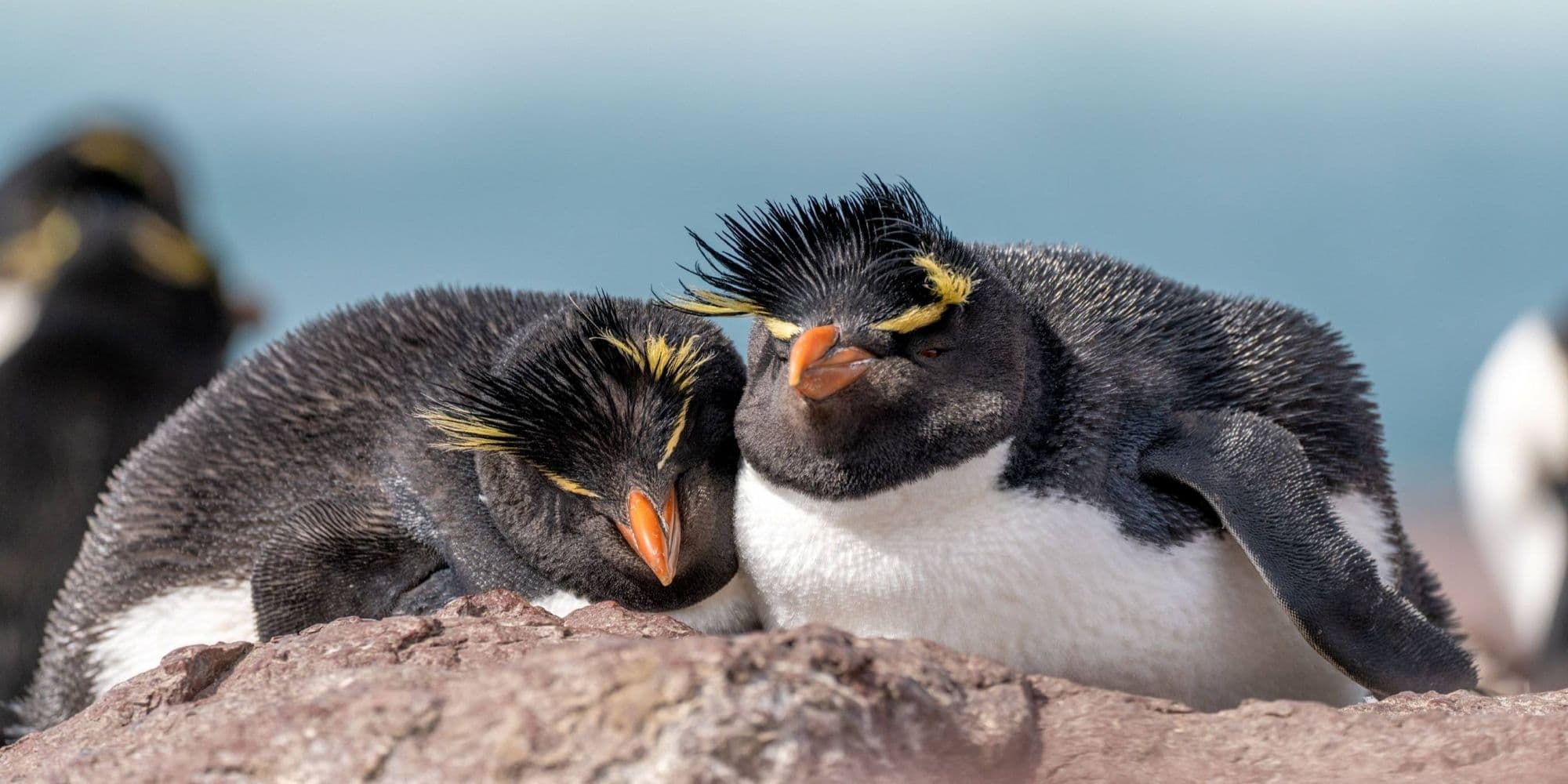
Rockhopper Penguins inhabit rocky islands throughout the sub-Antarctic, hopping up steep cliffs to reach breeding sites on clifftops.
Royal Penguins breed exclusively on Macquarie Island between New Zealand and Antarctica.
These islands offer milder temperatures than Antarctica while maintaining food-rich ocean waters—perfect penguin habitat.
New Zealand: Temperate Penguin Paradise
New Zealand hosts impressive penguin diversity, including some of the rarest species.
Yellow-eyed Penguins are one of the world's rarest penguins, breeding only in New Zealand. They're shy, solitary nesters that prefer dense coastal vegetation—very different from massive Antarctic colonies.
Little Blue Penguins are the smallest penguins at just 30 cm tall. They've adapted remarkably well to humans, nesting in urban areas, under beach houses, and beneath city boardwalks.
Fiordland Penguins inhabit temperate rainforests and fiords, nesting in caves, under tree roots, and in dense forest undergrowth—as far from the Antarctic ice stereotype as you can get.
Snares Penguins breed exclusively on the Snares Islands south of New Zealand.
Australia: The Urban Penguins
Australia hosts one penguin species that's become expert at living alongside humans.
Little Blue Penguins breed along southern and eastern Australian coasts, from Perth to Sydney. They're nocturnal commuters who head to sea before sunrise and return after dark.
What's remarkable is their urban adaptation. Little Blues nest in stormwater drains, under coastal homes, beneath piers, and in rock crevices along city waterfronts. The famous Penguin Parade at Phillip Island near Melbourne attracts thousands of tourists who watch these tiny penguins waddle up the beach at sunset.
South America: Riding the Humboldt Current
South America's coasts host several penguin species benefiting from nutrient-rich upwellings.
Magellanic Penguins are the most common South American penguins, breeding in large colonies in Argentina, Chile, and the Falklands. They nest in burrows or under bushes.
Humboldt Penguins live along the Pacific coast of Chile and Peru, riding the cold Humboldt Current northward. They breed in coastal caves and burrows, sometimes where daytime temperatures reach 30°C.
These species face unique challenges—unlike Antarctic penguins dealing with extreme cold, South American penguins cope with heat stress, human development, and fishing competition.
South Africa: The Only African Penguin
African Penguins (also called Jackass Penguins for their braying calls) are the only penguin species breeding on the African continent. They live along South Africa's coast, particularly around Cape Town.
These penguins thrive in Mediterranean climates where summer temperatures regularly exceed 25°C. They manage heat by standing in shade, spreading flippers to radiate heat, and panting.
Tragically, African Penguin populations have declined over 95% in the past century due to overfishing, oil spills, and habitat loss. They're now critically endangered.
Galápagos Islands: Penguins at the Equator
The most surprising penguin habitat belongs to the Galápagos Penguin—the only penguin north of the equator.
These penguins live where equatorial sun beats down and air temperatures reach 38°C. How? The Cromwell Current brings cold, nutrient-rich water from the deep ocean to the Galápagos coast, creating conditions similar to penguin habitats thousands of kilometers south.
Galápagos Penguins are small (50 cm tall, 2.5 kg), helping them shed heat efficiently. They hunt during cool parts of the day, often at night, and spend time in shade with flippers spread.
With only about 1,200 individuals, they're one of the rarest penguins. Their survival depends entirely on cold currents continuing to flow.
Do Penguins Live in the Arctic?
No—despite the Arctic being much colder than many penguin habitats, penguins have never lived there. They evolved in the Southern Hemisphere around 60 million years ago and never crossed the equator. Tropical equatorial waters act as a barrier that penguins can't cross for extended periods.
Additionally, the Northern Hemisphere already has ecological equivalents: auks, puffins, and murres occupy similar niches. These birds can both fly and dive, filling the role penguins play in the south.
The Pattern Behind Penguin Distribution
Where do penguins live in the world? The answer reveals a clear pattern.
Penguins live wherever cold ocean currents meet Southern Hemisphere coastlines. This means ice sheets, but also temperate forests, urban beaches, rocky islands, desert coasts, and tropical volcanic islands.
The unifying factor isn't climate or latitude—it's ocean productivity. Every penguin species depends on nutrient-rich water supporting abundant marine life. As long as food exists, penguins adapt to their terrestrial environments.
From Emperor Penguins breeding in -60°C darkness to Galápagos Penguins panting in equatorial heat, these birds have conquered an impressive range of habitats. They're not just Antarctic specialists—they're Southern Ocean opportunists who follow the food.
Next time someone says penguins live in Antarctica, you can share the more interesting truth: most penguin species prefer warmer climates, and some have never seen ice in their lives.