What Is the Oldest Penguin Ever Recorded?
Discover the oldest penguins ever documented, from wild Antarctic survivors to long-lived captive birds, and learn what helps some penguins live 40+ years.
A penguin surviving past 40 years is one of nature's rarest achievements. Most penguins die within their first decade. Only a handful ever reach four decades.
Quick answer: The oldest reliably documented penguin was a King Penguin named Oma, who lived 46 years in captivity at Wuppertal Zoo in Germany (1974-2020). In the wild, penguins rarely exceed 30–40 years based on long-term banding studies, and most species live far less. Only a very small fraction of penguins ever reach such ages.
These rare survival stories show what's possible when resilience, favorable conditions, and luck align.
Longevity Records in the Wild
Long-term banding studies, where scientists attach small numbered bands to penguins to track them over time, show that some wild penguins can live into their 30s, and rare individuals may approach 40 years. However, unlike captivity cases, there is no single universally documented wild penguin holding a verified “oldest ever” title with an exact confirmed age.
Emperor Penguins typically live 15-20 years in the wild. Larger species such as King Penguins have occasionally been documented reaching their 30s through banding programs. Reaching four decades in nature is considered extraordinary and extremely rare.
Tracking wild penguins across decades is difficult. Harsh Antarctic conditions, migration patterns, and natural mortality make precise longevity confirmation far more challenging than in zoos.
Imagine returning to the same Antarctic breeding ground for decades, watching entire generations come and go. That kind of survival in the wild represents exceptional endurance - and a significant amount of luck.
The Oldest Penguin in Captivity: 46 Years
While wild penguins face relentless challenges, those in human care often live significantly longer.
King Penguin - 46 Years (Oma)
The strongest confirmed penguin longevity record belongs to a King Penguin named Oma, who lived 46 years at Wuppertal Zoo in Germany. Hatched in 1974 from an Antarctic egg and euthanized in 2020 due to age-related health issues, Oma represents the longest reliably documented lifespan across penguin species.
African Penguin - 43 Years (ET)
An African Penguin named ET reached 43 years, 4 months at Metro Richmond Zoo. This far exceeds the typical 10–15 year lifespan African Penguins experience in the wild.
Gentoo Penguin - 41+ Years (Olde)
A Gentoo Penguin named Olde at Odense Zoo lived beyond 41 years.
These cases highlight how consistent food supply, veterinary care, and the absence of predators allow penguins to approach their biological limits.
Did you know? Some banded penguins have been observed breeding successfully for over 25 consecutive years!
The Story of C1: Antarctica's "Grandfather Penguin"
One of the most remarkable wild penguin stories comes from researchers at Pointe Géologie in Antarctica, who tracked an Emperor Penguin they nicknamed "the Grandfather."
This individual was first banded in the 1970s as a young adult. Year after year, decade after decade, researchers would return to the colony and find him there - older, but still breeding. By the time observations ended in the early 2000s, he had been documented for over 30 years and was likely even older, since he was already an adult when first banded.
What made the Grandfather remarkable wasn't just his age. It was his consistency. While other penguins came and went, disappeared to predators, or failed to return from ocean trips, the Grandfather showed up every single breeding season. Same colony. Same approximate spot. Researchers began to recognize him not just by his band, but by his behavior - a steady, methodical veteran who seemed to know exactly how to just survive Antarctica.
One researcher described him as having a "calm presence" among the chaos of thousands of breeding penguins. While younger birds panicked during storms or struggled with their first chicks, the Grandfather simply endured, as he had for decades.
His eventual disappearance is sometime in the mid-2000s after more than 30 documented years marked the end of an era for the research team. They'd watched him outlive entire generations of penguins, surviving conditions that killed thousands of others.
The Grandfather's story reminds us that survival in Antarctica isn't just about biology, it's also about experience, consistency, and perhaps a certain penguin wisdom that only decades of experience can bring.
How Do Other Penguins Compare?
To understand how rare these records are, consider how other species compare:
- Little Blue Penguins: Rarely exceed 10-15 years, even in captivity
- Adélie Penguins: Usually under 20 years in the wild
- Magellanic Penguins: Occasionally reach 30+ years
- Gentoo Penguins: Can reach early 30s in captivity
- Emperor & King Penguins: Most likely to break 30 years, with exceptional individuals exceeding 40 in captivity
This shows that reaching 40 years isn't just impressive - it's exceptional even among naturally long-lived species.
What Allowed These Penguins to Reach 40+ Years?
Why do some penguins live decades longer than others? The answer involves multiple factors:
Size Advantage
Larger penguin species live longer than smaller ones. Emperor and King Penguin - the two largest species—hold most longevity records. Their size provides advantages: more fat reserves to survive lean periods, better temperature regulation, and reduced predation risk as adults.
The smallest species, Little Blue Penguins, rarely approach such ages.
Avoiding Predators
The biggest killers of penguins in the wild are predators. Leopard seals, orcas, sharks, and sea lions hunt adults, while skuas and giant petrels prey on chicks and eggs.
Penguins that survive year after year simply avoid the countless lethal encounters that end most lives early.
Stable Food Supply
Starvation limits many wild lifespans, especially during breeding seasons when parents must fast while incubating eggs. Penguins with consistent food access, whether due to favorable ocean conditions or human care, have better opportunities for record longevity.
Genetics and Luck
Like humans, some penguins are genetically coded to have longer lives. The longest-lived documented penguins represent the fortunate intersection of strong genetics, survival skill, and sheer luck.
How Do Scientists Confirm a Penguin's Age?
Banding Programs
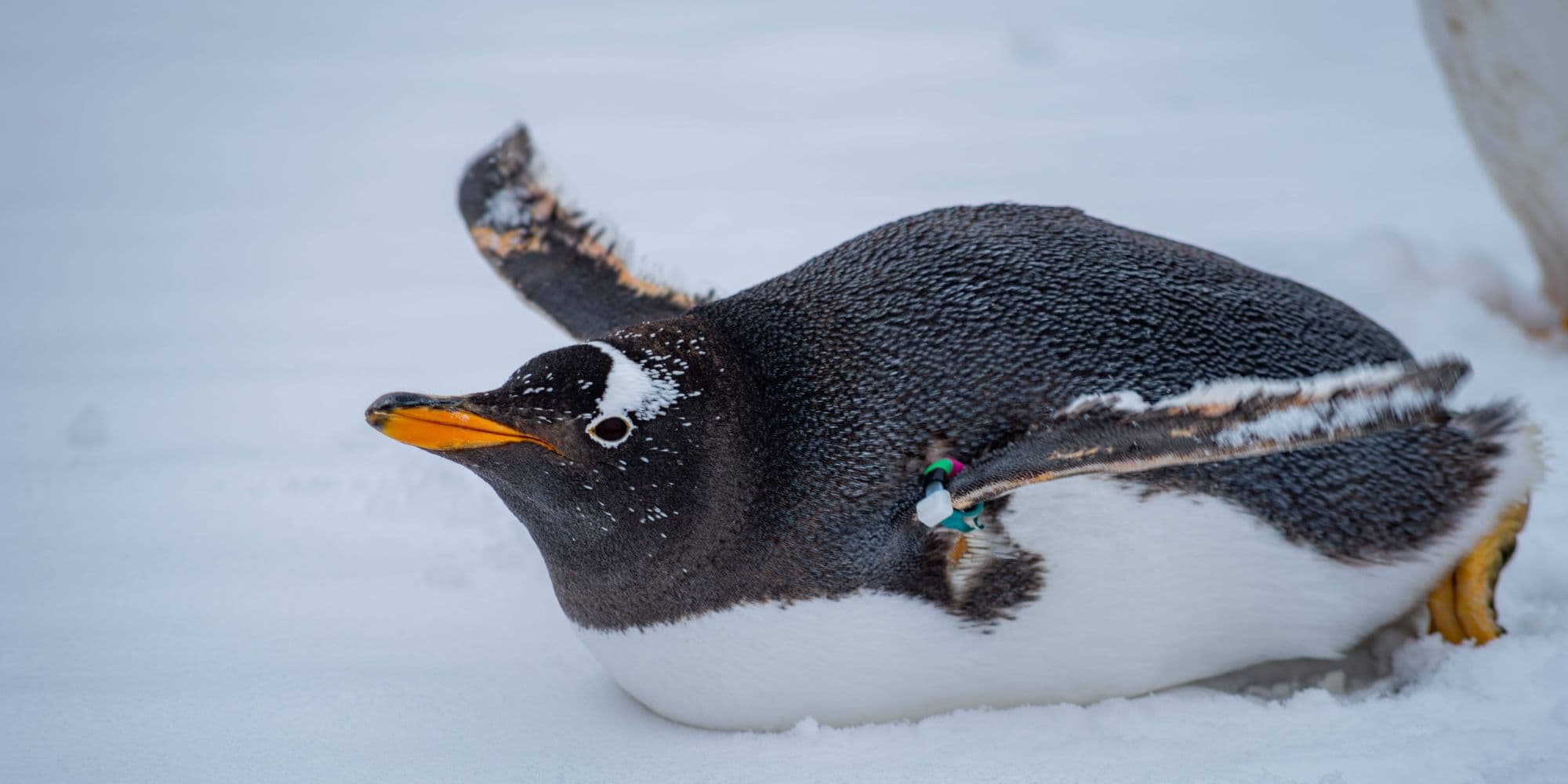
Scientists place uniquely numbered bands on penguin flippers. When the same bird is observed years later, researchers calculate its age from the original banding date.
Banding provides reliable longevity data, but only when individuals are repeatedly observed.
Captive Records
Zoos maintain detailed hatch records, making age determination exact in captivity. This is why the longest confirmed ages almost always come from zoological institutions rather than wild populations.
Why Most Penguins Never Reach These Ages
While these records inspire awe, they represent extreme outliers.
Only a very small fraction of penguins ever reach 40 years.
Here's the reality:
- 50-90% of chicks die before reaching adulthood
- Juvenile mortality remains high as inexperienced hunters struggle
- Adult threats are constant preditors, starvation, disease, and environmental extremes
- Climate change is increasing mortality through disrupted ice conditions and food webs
The average Emperor Penguin is 15-20 years not because they can't live longer, but because few survive long enough to reach advanced age.
What Old Age Looks Like
How do researchers recognize truly old penguins?
Reduced activity levels - Older birds may swim less vigorously and rest more frequently.
Breeding decline - Some show reduced reproductive success, though many remain active breeders into their 20s and beyond.
Physical wear - Bill wear, feather condition changes, and general health indicators can signal advanced age.
Even so, many older penguins remain surprisingly robust well into their later years.
Conservation Implications
Understanding penguin longevity matters for conservation. Long-lived species like Emperor and King Penguins are particularly vulnerable to population declines.
These species do not breed until age 5-8 and invest heavily in raising single chicks. If adult survival declines due to climate change or overfishing, populations cannot quickly recover.
The 46-year lifespan of Oma in captivity shows what is biologically possible. In the wild, far fewer penguins get that opportunity.
The Bottom Line
So how old was the oldest penguin ever recorded?
The strongest confirmed record belongs to a King Penguin named Oma, who lived 46 years in captivity. Other penguins have surpassed 40 years in human care, but in the wild, most penguins live much shorter lives, and reaching even 30 years is uncommon.
These record-breakers remind us that while penguin life is often harsh and uncertain, the species itself is built for remarkable endurance. When conditions allow, penguins can thrive for decades.