Antarctica: Everything You Need to Know About the Frozen Continent
Discover Antarctica's extreme environment, unique wildlife, scientific importance, and climate role. A comprehensive guide to Earth's most remote and mysterious continent.
Antarctica is the coldest, driest, and most isolated continent on Earth - a place so harsh that humans explorers didn't reach it until the 19th century. Yet this frozen wilderness plays a crucial role in regulating global climate and hosts surprising amounts of life.
Antarctica is the fifth-largest continent, covered by an ice sheet averaging 2 kilometers thick that contains 90% of Earth's ice and 70% of its fresh water. Despite extreme conditions with temperatures reaching -89°C, it supports rich marine ecosystems and specialized life on land. Dozens of research stations from various nations operate here, though no country owns Antarctica in a traditional sense - it's governed by the Antarctic Treaty System, which designates the continent for peaceful purposes and scientific research.
This remote continent holds secrets about Earth's past climate, drives ocean that regulate global weather, and serves as our planet's early warning system for climate change.
Where Is Antarctica and How Big Is It?
Antarctica sits at the bottom of the world, centered on the South Pole and surrounded by the Southern Ocean. It's the fifth-largest continent at roughly 14 million square kilometers - larger than Europe and nearly twice the size of Australia.
But here's what makes Antarctica distinctive: it's the only continent almost entirely covered by ice. The Antarctic ice sheet averages about 2 kilometers thick and reaches maximum depths exceeding 4 kilometers in some locations. If the ice disappeared, Antarctica would be much smaller - West Antarctica in particular would shrink dramatically, since much of its bedrock lies below sea level.
The continent is divided into two main regions:
East Antarctica is the larger portion, a massive high plateau of ancient continental crust covered by the thickest ice. It's incredibly stable and contains most of Antarctica's ice mass.
West Antarctica is smaller, lower in elevation, and geologically younger. Its ice rests partly on bedrock below sea level, making it more vulnerable to melting.
The Antarctic Peninsula extends northward toward South America like a pointing finger. It's the warmest part of Antarctica and where most wildlife congregates.
The Most Extreme Environment on Earth
Antarctica doesn't just hold records - it sets the global extremes:
Temperature: The Coldest Place
The coldest temperature ever recorded on Earth was -89.2°C (-128.6°F) at the Soviet Vostok Station in 1983. Winter temperatures at the South Pole regularly drop below -60°C, and even in summer, when the sun never sets - temperatures at the interior rarely climb above -30°C.
Antarctica is colder than the Arctic because it sits on a high landmass rather than floating sea ice - the elevation and lack of ocean heat below make temperatures far more extreme.
The coast is relatively mild by Antarctic standards, with summer temperatures sometimes reaching just above freezing. But "mild" in Antarctica still means conditions that would kill an unprepared human within hours.
Wind: Relentless and Extreme
Antarctica is the windiest continent. Katabatic winds, cold, dense air flowing down from the high interior plateau, can exceed 200 km/h in some coastal areas. These winds are so consistent and powerful that they shape the landscape, create areas of permanent open water called polynyas, and make simple tasks at research stations incredibly challenging.
Dryness: A Frozen Desert
Despite being covered in ice, Antarctica is almost a desert - the driest continent on Earth. The interior receives less than 50 mm of precipitation each year - almost all of it falling as snow. For comparison, much of the Sahara Desert averages between 25 and 100 mm per year. The extreme cold means the air holds almost no moisture.
This seems contradictory given all that ice, but Antarctica's ice accumulated over millions of years. Very little new snow falls in the interior; it's simply so cold that what does fall never melts.
Darkness and Light
Antarctica experiences six months of continuous daylight in summer and six months of darkness in winter. This isn't gradual—at the South Pole, the sun rises once per year around September 21 and sets once per year around March 21.
This light cycle profoundly affects everything from wildlife behavior to human psychology among research station staff.
The Ice Sheet: Antarctica's Defining Feature
The Antarctic ice sheet is one of Earth's most important climate features and one of the most massive objects on the planet.
This ice sheet contains approximately 26.5 million cubic kilometers of ice - about 90% of all ice on Earth and roughly 70% of the planet's fresh water. If it all melted, global sea levels would rise approximately 58 meters, drowning most coastal cities.
The ice isn't static. It flows slowly from the high interior toward the coast at rates varying from meters to hundreds of meters per year.
When this ice reaches the ocean, it forms massive ice shelves - floating platforms of ice still connected to the land. The Ross Ice Shelf and Ronne Ice Shelf are each larger than many countries.
These ice shelves help stabilize the land-based ice sheet by slowing its movement into the sea. When ice shelves collapse, as several have in recent decades, the land ice behind them flows faster toward the ocean.
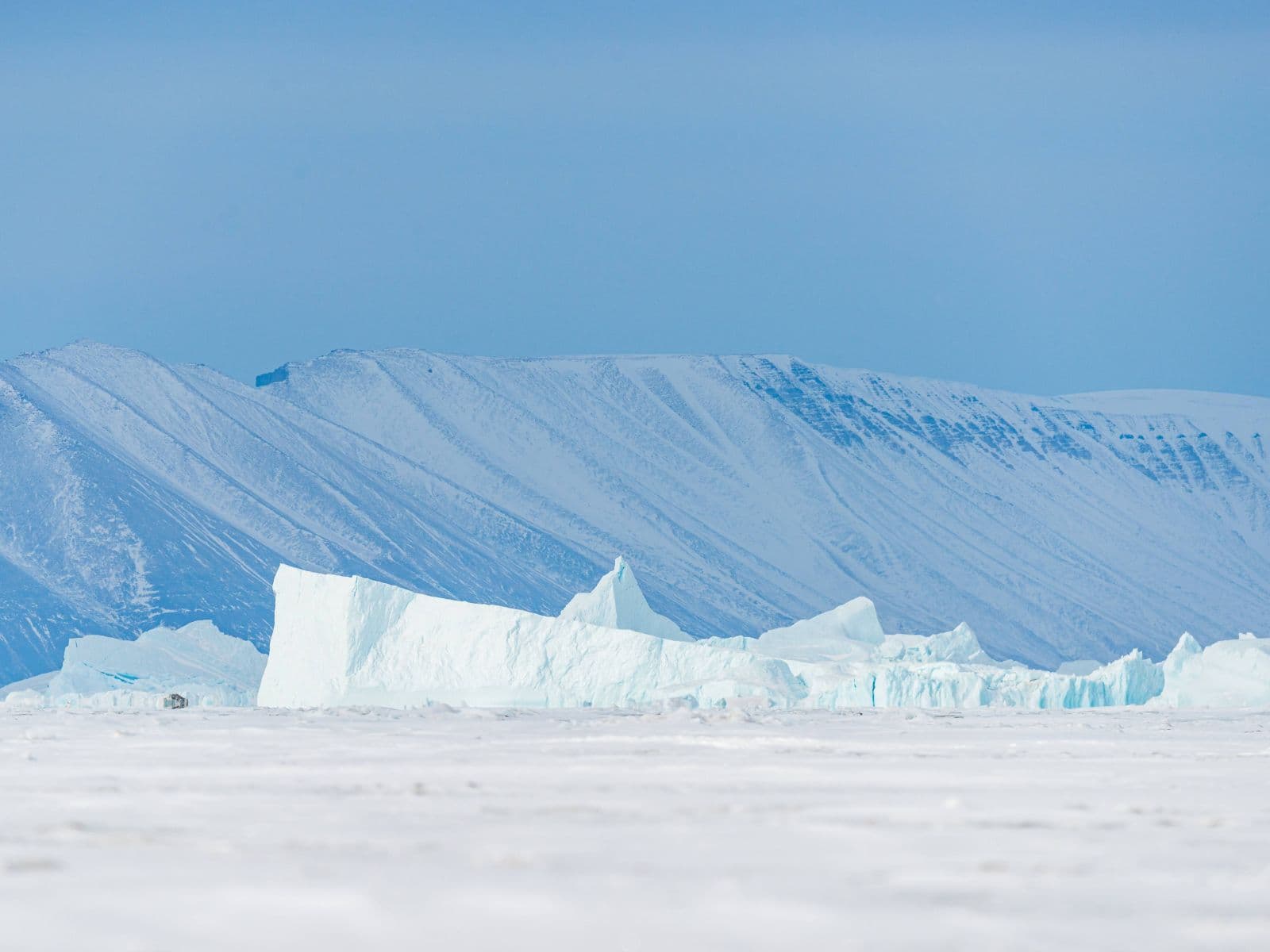
Icebergs form when chunks of ice break off from ice shelves or glaciers in a process called calving. Antarctic icebergs can be enormous, some the size of small countries,, and can drift in the Southern Ocean for years before melting.
In short, Antarctica's ice sheet isn't just large - it's planet-defining in scale and consequence.
Wildlife: Life in the Extreme
Despite brutal conditions, Antarctica and its surrounding waters support remarkable wildlife adapted to the cold.
Penguins
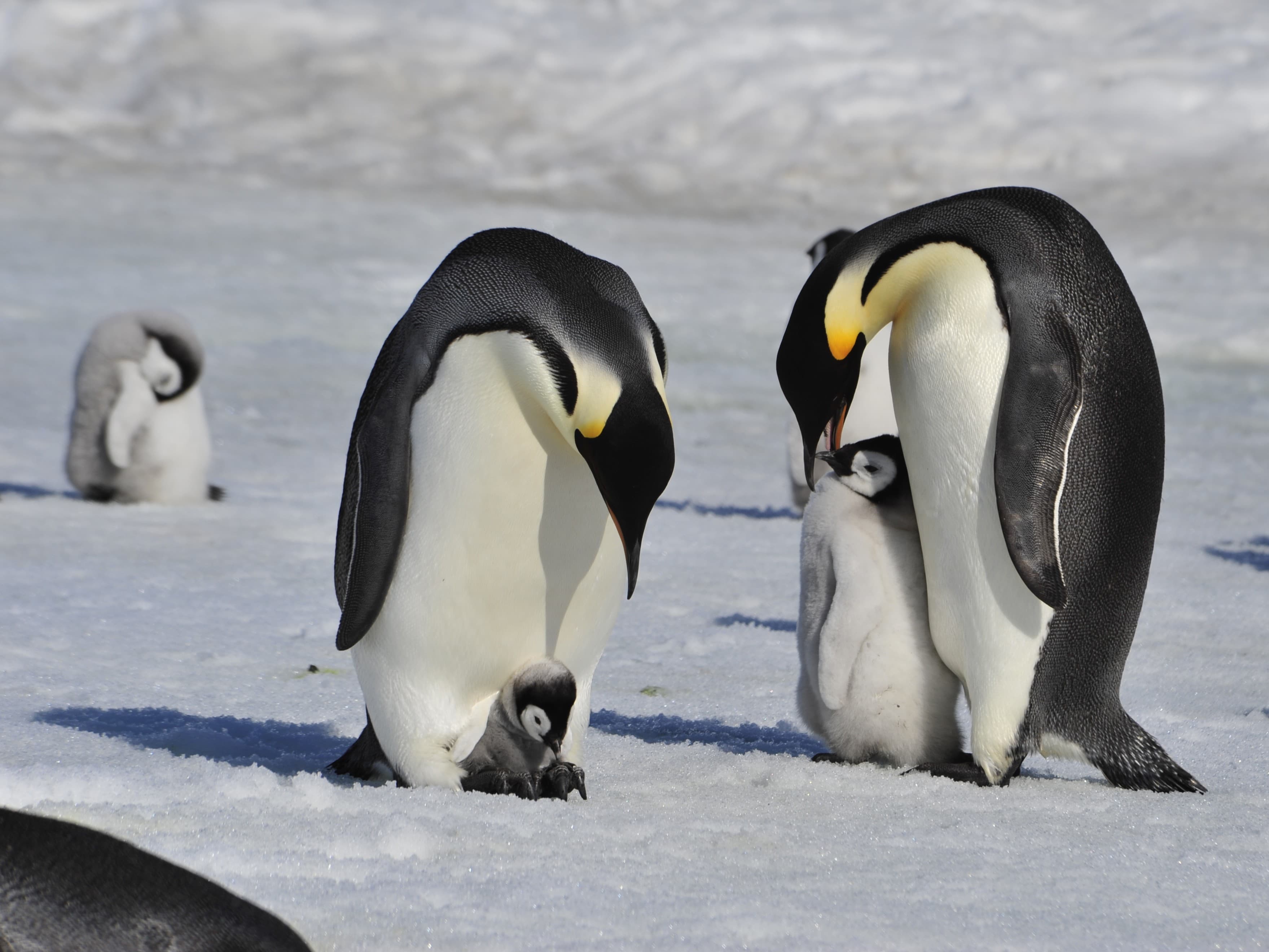
Four penguin species breed on the Antarctic continent itself: Emperor, Adélie, Chinstrap, and Gentoo. Emperor Penguins are the most famous, breeding during the Antarctic winter in conditions no other bird attempts.
Sub-Antarctic islands host additional species including King, Macaroni, and Rockhopper penguins. These birds have evolved incredible adaptations — from dense feathers to counter-current heat exchange systems—that allow them to thrive where most life cannot.
Seals
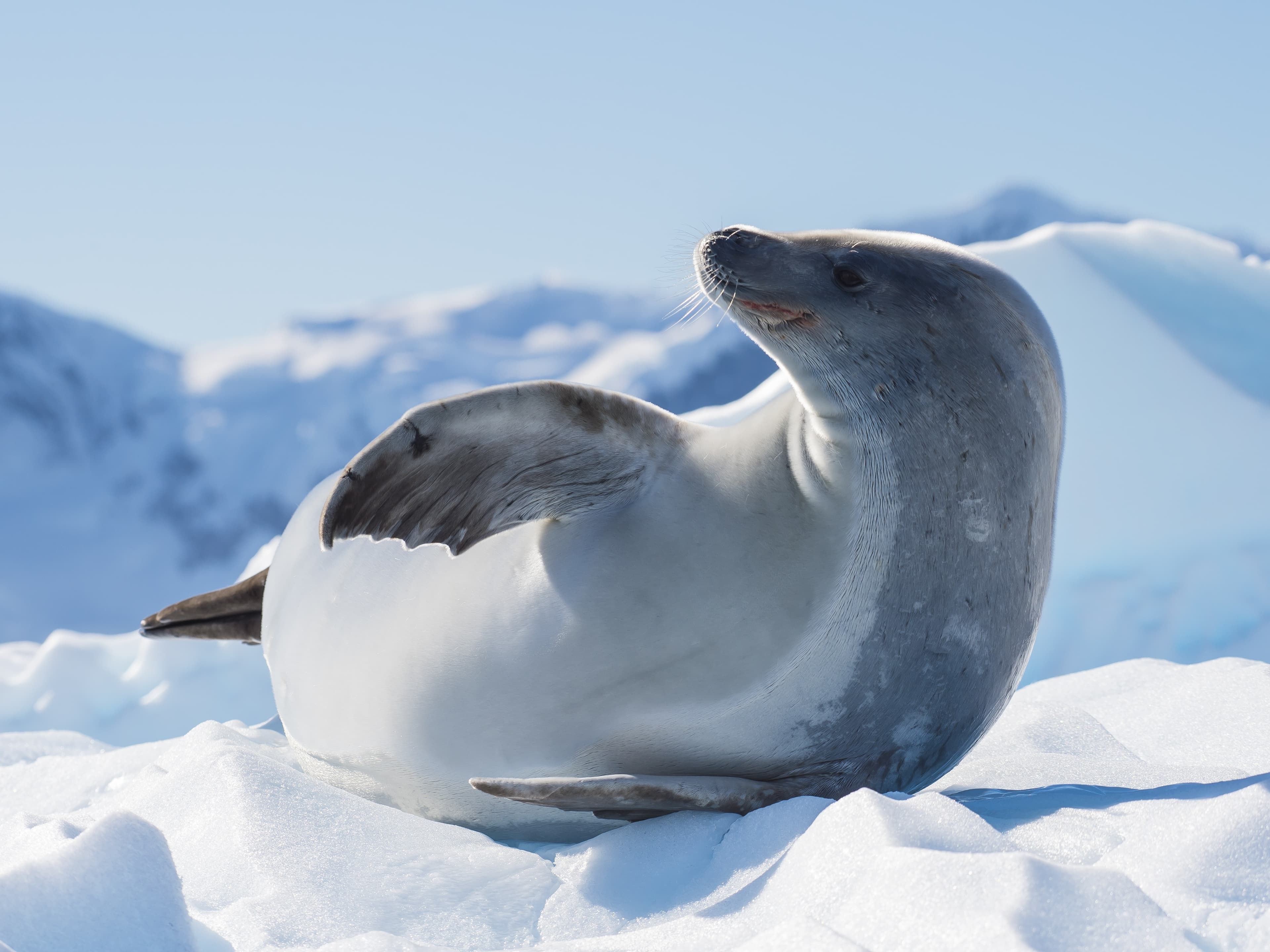
Six seal species inhabit Antarctic waters. Weddell Seals are the southernmost breeding mammals, living farther south than any other seal. Crabeater Seals are the most numerous large mammal on Earth with populations estimated at 7-15 million. Leopard Seals are apex predators that hunt penguins and other seals.
Whales
The Southern Ocean's summer productivity attracts massive whale populations. Blue Whales, the largest animals ever to exist, migrate here to feed on krill. Humpback, Minke, Fin, and Orca whales also frequent Antarctic waters.
Krill: The Foundation
Antarctic krill are small shrimp-like crustaceans that form the foundation of the Antarctic food web. They form swarms so enormous, around 500 million tons of living biomass, that the water above them can appear pink from the surface. Nearly every Antarctic predator depends on krill either directly or indirectly.
On Land
Land-based life in Antarctica is limited to tiny invertebrates, small creatures without backbones such as mites and springtails, and the Antarctic midge, the continent’s largest purely terrestrial animal at just 2–6 mm long. No reptiles, amphibians, or land mammals live in Antarctica.
Scientific Research: Antarctica as Laboratory
Antarctica hosts about 70 permanent research stations operated by roughly 30 countries. In summer, the population swells to around 5,000 people. In winter, only about 1,000 remain—cut off from the rest of the world as temperatures drop below -60°C and the continent plunges into months of total darkness.
Antarctica hosts 75 permanent research stations operated by 29 countries (led by Argentina with 13 and Chile with 12), making it one of the most internationally collaborative scientific regions on Earth. During the summer, roughly 4,800–5,000 people live and work across these stations, while winter populations drop to 1,000–1,100 because most researchers leave as temperatures plunge below -60°C temperatures and total darkness. The largest base, the United States’ McMurdo Station, supports 1,100–1,200 residents in summer and serves as a major logistics hub. The U.S. Antarctic Program, managed by the National Science Foundation, deploys 3,000+ scientists and support personnel each year and receives ~$450–500 million in annual funding to support operations and research in 2025 estimate.
Climate Science
Antarctica’s ice cores - long cylinders of ice drilled from deep within the ice sheet - provide our best record of past climate. By drilling deep into the ice sheet, scientists extract cylinders of ice containing trapped air bubbles from hundreds of thousands of years ago. These bubbles preserve ancient atmospheric composition, allowing us to reconstruct past temperatures and CO₂ levels.
The longest ice core records extend back 800,000 years, providing clear evidence of natural climate cycles and showing how current CO₂ levels exceed anything seen in nearly a million years.
Astronomy
Antarctica's high, dry plateau makes it one of Earth's best places for certain types of astronomy. The cold, stable air and months of darkness provide exceptional observing conditions. The South Pole hosts several major telescopes.
Biology
Scientists study how life survives such cold, offering insights into the limits of life on Earth and potentially on other planets. Some Antarctic organisms have antifreeze proteins in their blood, while others can survive being frozen solid.
Geology
Antarctica's rocks tell stories of Earth's ancient past. The continent was once part of the supercontinent Gondwana and was much warmer - fossil evidence shows Antarctica once had forests and dinosaurs.
Climate Change: Antarctica's Warning
Antarctica is both a driver of global climate and increasingly affected by climate change.
The Antarctic's Climate Role
Antarctica plays a vital role in global climate regulation. The cold, dense water formed around Antarctica sinks and drives the global ocean conveyor belt - a circulation pattern that distributes heat around the planet. The bright white ice reflects sunlight back to space, helping keep Earth cool, while the Southern Ocean absorbs enormous amounts of CO₂ from the atmosphere.
How Antarctica Is Changing
The Antarctic Peninsula has warmed faster than almost anywhere on Earth over the past 50 years—about 3°C since the 1950s. While the interior of East Antarctica has shown little warming, West Antarctica is experiencing significant temperature increases.
Antarctica is losing ice mass. Several major glaciers are thinning and flowing faster, and multiple ice shelves have partially or completely collapsed, including the Larsen A and B ice shelves. When ice shelves disappear, glaciers behind them accelerate toward the ocean.
Antarctic sea ice varies a lot year to year, but it has also hit recent record lows, adding to concerns about the region's rapid changes.
Why It Matters
If West Antarctic ice sheet collapse accelerates, it could contribute several meters to sea level rise over coming centuries. Even a meter of sea level rise would displace hundreds of millions of people and flood trillions of dollars worth of coastal infrastructure.
Antarctica's changes affect global ocean circulation, marine ecosystems, and potentially weather patterns worldwide.
The Antarctic Treaty: A Model for Peace
Antarctica is the only continent without a native human population and the only major landmass not owned by any country - thanks to the Antarctic Treaty.
Signed in 1959 during the Cold War, the Antarctic Treaty designated the continent as a scientific preserve. It prohibits military activity, nuclear testing, and mineral mining. It promotes scientific cooperation and requires that research findings be shared openly.
The treaty currently has 54 signatory nations and represents one of the most successful international agreements ever created. It's often cited as a model for peaceful international cooperation.
Who Can Go to Antarctica?
While no one owns Antarctica, access is regulated. Scientific expeditions require permits. Tourism is allowed but strictly controlled. Tour guides must follow environmental protocols, and visitor numbers are limited.
Several thousand tourists visit Antarctica each year, mostly arriving by ship to the Antarctic Peninsula. It's one of the most expensive and remote destinations on Earth, but those who make the journey describe it as life-changing.
The Future of Antarctica
Antarctica's future is tied to global climate action. Current projections suggest continued ice loss, especially from West Antarctica, possible ice shelf collapses in warming areas, and increasing contributions to sea level rise over coming centuries.
But Antarctica's future isn't predetermined. Limiting global warming could prevent the most catastrophic scenarios, preserving this continent and preventing massive sea level rise.
The Bottom Line
Antarctica is far more than a frozen wasteland at the bottom of the world. It's a climate regulator, a scientific laboratory, a wildlife refuge, and a frozen record of Earth's climate history spanning hundreds of thousands of years.